
-
operations@rangertcs.com
Send Email
-
1800 W Littleton Blvd
Visit Our Office
720-419-1515
Confidentiality Guaranteed
12
Oct
Oct
Is Surveillance Legal in Colorado? What Rules Apply
A camera outside a rental property, a recorded conversation, or a GPS device on a vehicle can answer a critical question in a legal matter. It can also create avoidable legal exposure. If you are asking, is surveillance legal in Colorado, the direct answer is: often, but only when the method, location, subject, and purpose comply with Colorado and federal law.
For attorneys, landlords, businesses, and private parties, the operational issue is not simply whether information can be collected. The issue is whether it can be collected lawfully, documented accurately, and used without damaging the underlying case. Surveillance that crosses privacy, recording, trespass, stalking, or harassment boundaries may create civil claims, criminal consequences, or evidence problems.
Is Surveillance Legal in Colorado? It Depends on the Method
Colorado law does not prohibit all surveillance. Lawful observation in public places is common in insurance investigations, civil litigation, asset matters, process-serving support, and workplace security. A person generally has a lower expectation of privacy when they are visible from a public location.
The analysis changes when surveillance involves audio, private spaces, tracking technology, or conduct that follows and intimidates another person. A lawful purpose does not automatically make every surveillance method lawful. Collecting evidence for an eviction, custody, debt, employment, or civil case still requires a compliant approach.
A practical starting point is to ask four questions: What is being recorded or observed? Where is it occurring? Does the subject have a reasonable expectation of privacy? Is the collection method intrusive, deceptive, or repeated in a way that could be considered harassment?
Video Surveillance: Public Observation Versus Private Areas
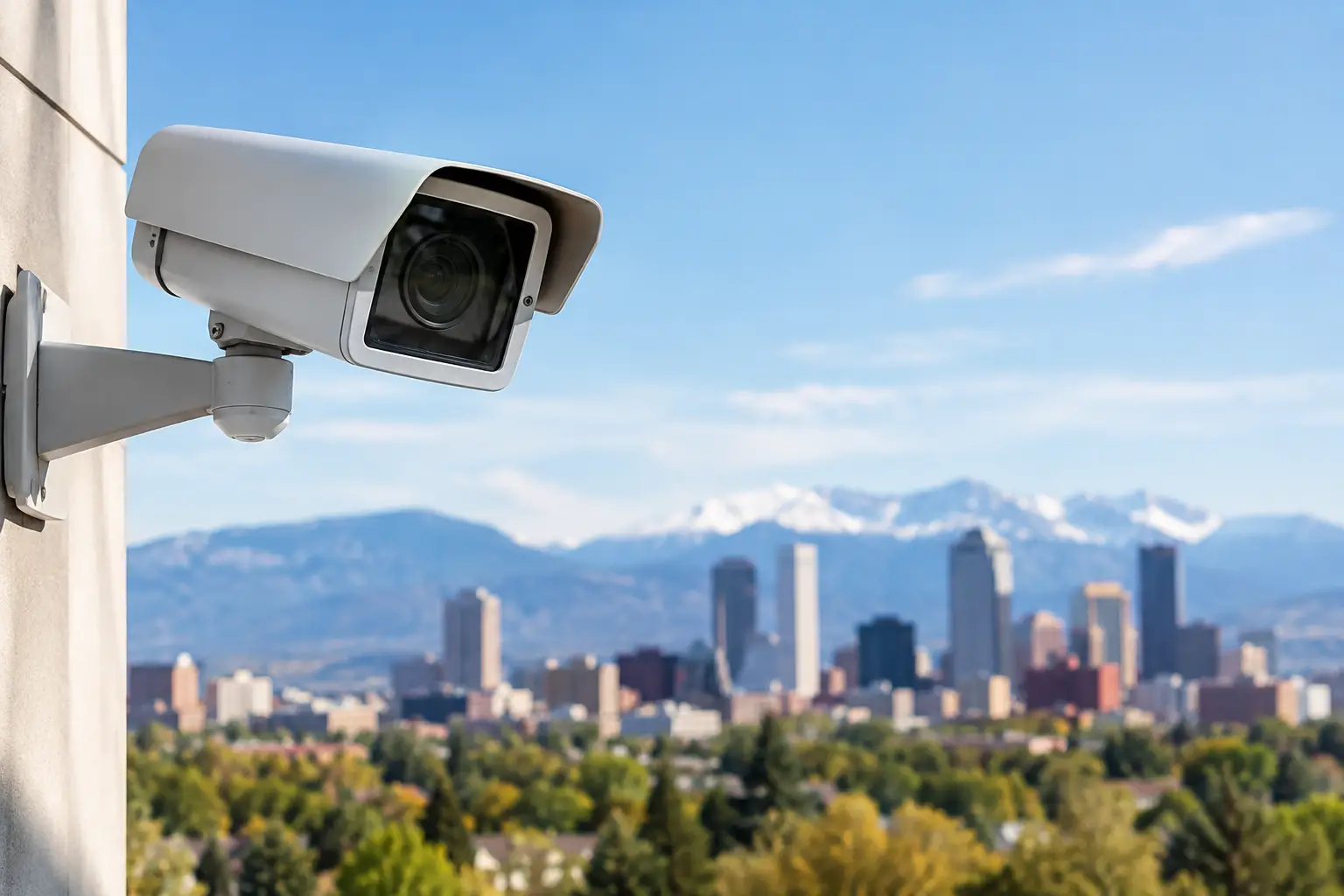
Video surveillance is generally more defensible when it captures activity visible from a place where the observer has a legal right to be. Examples may include a business entrance, parking lot, building exterior, shared common area, public sidewalk, or a subject entering and leaving a public location.
That does not give a property owner or investigator unlimited authority. Cameras should not be placed in locations where people reasonably expect privacy. Bathrooms, changing rooms, locker rooms, hotel rooms, bedrooms, and similar private spaces present serious legal concerns. Hidden recording in intimate or private areas can lead to criminal allegations and civil liability.
A camera on private property also does not automatically authorize recording beyond that property. Positioning matters. A device aimed at a neighbor’s bedroom window, enclosed yard, or another private area can create problems even if the camera itself is installed on the operator’s property.
For landlords and property managers, exterior security cameras and cameras in disclosed common areas can serve legitimate safety and property-protection purposes. Units occupied by tenants are different. Entering a tenant’s residence, installing a device inside it, or recording activity in private living areas without valid legal authority can create substantial exposure.
Hidden Cameras Require Extra Caution
Covert video can be lawful in limited circumstances, but it is not a default investigative tool. The more private the setting, the greater the risk. Before using concealed equipment, consider whether direct observation, documented public-facing video, witness statements, records research, or another less intrusive method can establish the needed facts.
A professional surveillance plan should identify the location, purpose, observation window, authorized personnel, and reporting requirements before field work begins. This reduces the chance that a useful assignment becomes an unauthorized one.
Colorado Audio Recording Rules Are More Restrictive in Practice
Audio recording presents a different issue from silent video. Colorado is generally a one-party consent state for recording conversations. In plain terms, a person who is part of a conversation can usually consent to recording it. Recording a conversation when no participating party has consented can create legal risk, particularly when the speakers reasonably expect the conversation to be private.
This rule does not mean that secretly recording anyone, anywhere is safe. Context matters. Interstate communications may involve other states’ recording laws, and federal law may also apply. A Colorado participant recording a call with someone in a state that requires all-party consent can face a more complicated analysis.
For businesses, recorded customer calls, security systems with audio capability, interviews, and meetings should be handled with clear notice and a defined business purpose. If audio is not necessary, disabling it may reduce risk. Video systems often capture more than anticipated, and adding sound can materially change the legal analysis.
Never assume that a camera can record audio merely because it can record video. Review the device settings before deployment.
GPS Tracking and Vehicle Surveillance
GPS tracking is useful in some asset, fraud, and location-related matters, but it is not a universal solution. The key question is authority over the vehicle or device being tracked.
A business may have stronger grounds to track company-owned vehicles used for business purposes, particularly when employees receive notice of the tracking policy. Even then, the program should be tied to legitimate operational needs, such as fleet management, dispatch, safety, route verification, or theft prevention. Tracking off-duty movement without a clear policy and business justification creates additional risk.
A person should not casually place a GPS device on another person’s vehicle. Ownership, possession, consent, marital status, protection orders, and the nature of the relationship can all affect the analysis. Tracking a spouse, former partner, tenant, employee, or debtor without permission may raise privacy, stalking, harassment, or property-interference concerns.
Law enforcement GPS tracking has separate constitutional requirements and is not a model private parties should attempt to replicate. If location evidence is needed for litigation, counsel can determine whether discovery, subpoenas, preservation requests, or other lawful procedures are available.
Surveillance Cannot Become Stalking or Harassment
Repeated observation can cross the line when it is intended to intimidate, threaten, control, or cause emotional distress. This is especially significant in domestic relations disputes, neighbor conflicts, workplace disputes, and matters involving restraining or protection orders.
Even surveillance that begins with a legitimate objective should be paused and reviewed if the subject appears threatened, confronts the observer, or is protected by a court order. Do not continue contact, follow someone into private areas, confront the subject, or create a pattern that could be characterized as harassment.
Field personnel should maintain distance, avoid escalation, and accurately document what occurred. A report should distinguish direct observations from assumptions. For example, a time-stamped observation that a subject entered a location is stronger and safer than a conclusion about why the subject was there.
Workplace Monitoring Requires Notice and a Legitimate Purpose
Employers have valid reasons to monitor company systems, facilities, vehicles, and work activity. Security, loss prevention, timekeeping, quality control, trade-secret protection, and safety are common examples. But monitoring should be proportional to the purpose and clearly explained in written policies.
Employees may have reduced privacy expectations when using company equipment or working in monitored common areas, but that does not erase all privacy protections. Monitoring in restrooms, changing areas, or other sensitive locations is not appropriate. Employers should also be cautious about personal devices, remote-work environments, and broad monitoring of off-duty conduct.
A written policy should state what is monitored, when monitoring may occur, whether audio is collected, how long records are retained, and who can access them. Consistent enforcement matters. Selective surveillance aimed at a protected class, a whistleblower, or an employee exercising legal rights can create separate employment-law concerns.
Evidence Collection Should Be Built for Review
Lawful surveillance is only useful if the resulting evidence is credible. A photograph, video clip, location record, or observation report may be challenged based on authenticity, completeness, timing, editing, or the manner in which it was obtained.
For court-facing matters, preserve original files whenever possible. Record the date, time, location, equipment used, and identity of the person who collected the material. Maintain a clear chain of custody, avoid unnecessary editing, and retain notes that explain the circumstances of each observation.
Reports should be factual, chronological, and precise. Include relevant conditions such as weather, visibility, distance, and interruptions in observation. Do not overstate what footage proves. If a subject’s face was not visible, say so. If a vehicle could not be positively identified, document the basis for the possible match rather than presenting certainty that does not exist.
This level of documentation is particularly valuable when surveillance supports service of process, skip tracing, landlord-tenant disputes, civil litigation, or insurance-related claims. It gives counsel and clients a usable record rather than an informal account.
When to Involve Counsel or a Professional Investigator
Legal review is warranted before surveillance that involves audio recording, GPS technology, concealed devices, a residence, an employee, a minor, a protected party, or a subject in another state. The same is true when the expected evidence may be used in court.
A qualified investigative provider can help define a lawful scope, conduct field observation discreetly, preserve documentation, and provide reporting that is clear enough for legal review. Ranger TCS Investigations approaches surveillance assignments with defined objectives, factual reporting, and discretion appropriate for legal support work.
The strongest surveillance plan is rarely the most aggressive one. It is the one that collects only what is necessary, stays within clear legal boundaries, and produces records that can withstand scrutiny when the matter reaches a lawyer, opposing party, judge, or court.

