
-
operations@rangertcs.com
Send Email
-
1800 W Littleton Blvd
Visit Our Office
720-419-1515
Confidentiality Guaranteed
24
Sep
Sep
Surveillance vs Private Investigation Explained
A subject who avoids a known address, works irregular hours, or appears to be concealing assets does not always require the same response. The distinction between surveillance vs private investigation affects the scope of work, the evidence collected, the timeline, and the documentation available for a legal matter. Choosing the right service early can prevent unnecessary cost, missed service opportunities, and gaps in the record.
For attorneys, landlords, property managers, businesses, and private clients, the practical question is not which term sounds more serious. It is what information is needed, what can be lawfully obtained, and what result will move the matter forward.
Surveillance vs Private Investigation: The Core Difference
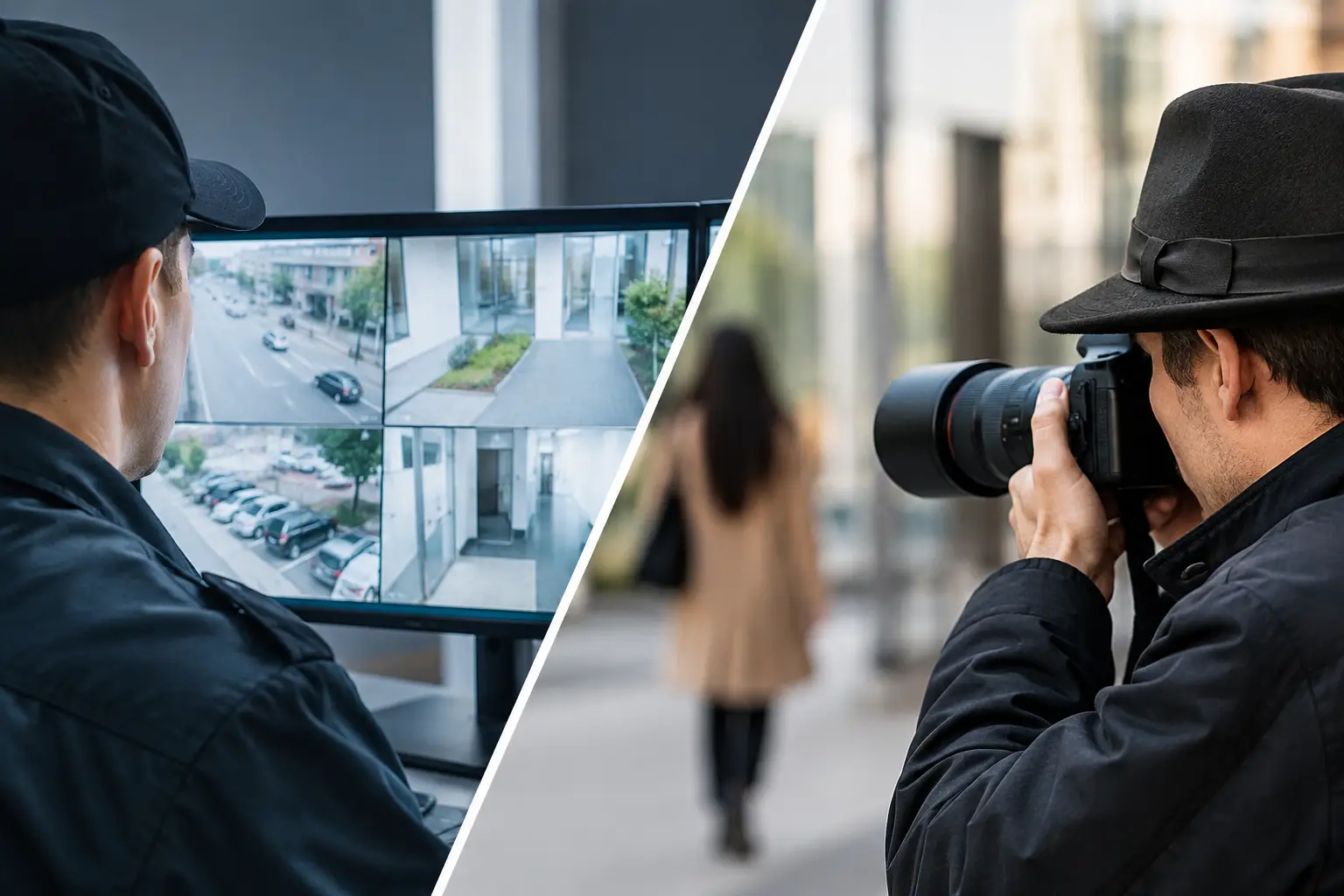
Surveillance is a specific investigative method. It involves observing and documenting a person, location, vehicle, or activity over a defined period. The purpose is generally to verify behavior, establish patterns, confirm a location, identify associates, or document activity relevant to a claim or legal proceeding.
Private investigation is the broader service category. It may include surveillance, but it can also involve skip tracing, records research, witness location, background research, interviews, asset-related research within legal limits, and verification of facts. An investigation may begin with a lead and end with a documented report, even if no field surveillance is required.
Put simply, surveillance answers questions such as, “Is this person at this address?” or “What happens at this location during the week?” Private investigation addresses the larger question: “What facts do we need to locate, verify, document, or clarify this matter?”
That difference matters when a client needs service of process. A subject may be difficult to serve because the address is outdated, the person is intentionally avoiding contact, or the person is only present at certain times. Surveillance can identify a workable service window. A broader investigation may be needed first if the current address, employer, vehicle, or routine is unknown.
When Surveillance Is the Right Tool
Surveillance is most useful when there is a defined subject and a specific factual issue to document. It is not random observation. Effective field surveillance starts with an objective, a lawful scope, and enough identifying information to avoid confusion with another person.
For example, a property manager may need to verify whether an unauthorized occupant is regularly staying at a rental property. An attorney may need to confirm whether a defendant is actually residing at an address before requesting additional service attempts. A business may need to document a recurring activity at a commercial location. In each case, the assignment is focused: observe, verify, record dates and times, and preserve accurate reporting.
A surveillance assignment can also support process serving. If routine delivery attempts have failed, a stakeout may identify when the recipient arrives home, leaves for work, or returns to a known location. This is different from simply making more attempts at the same address. The goal is to use documented behavioral information to create a lawful, practical service opportunity.
Surveillance has limits. It may not be efficient where the subject’s identity, current address, or daily routine is unknown. It can also produce little usable information if the observation window is too short or based on inaccurate background details. A professional investigator should explain those limits before field time is authorized.
When a Private Investigation Is More Appropriate
A private investigation is usually the better choice when the facts are incomplete. If a client does not know where a person lives, whether they are employed, whether the listed address is current, or whether a key witness can be located, research and verification should come before surveillance.
Consider a creditor pursuing a civil judgment, an attorney trying to locate a witness, or an individual preparing for a family-law matter. The initial need may be to establish reliable identifiers and current contact information. Skip tracing and investigative research can narrow possible addresses, identify connections, and separate outdated information from actionable leads.
Private investigations are also appropriate when a matter requires several methods working together. A case may involve reviewing public and permissible data sources, making discreet field inquiries, locating a subject, verifying residence, conducting surveillance, and producing a clear report. Each step should be tied to a legitimate purpose rather than treated as a standard package.
For legal clients, this broader approach can reduce wasted field time. Sending an investigator to watch an address that has not been verified can be less efficient than first confirming whether the subject still has a connection to that location. On the other hand, research alone may not establish actual presence. The right approach often combines both services in a deliberate order.
Evidence, Reporting, and Court Use
The value of surveillance or investigative work is not limited to what is observed or found. It also depends on how the work is documented. A useful report should identify the assignment objective, relevant dates and times, locations, observations, and the basis for any conclusions. Photographs, video, field notes, and supporting records must be handled accurately and preserved in context.
Court-ready documentation does not mean an investigator decides the legal outcome. It means the work is organized so an attorney or client can assess what occurred, how the information was obtained, and whether it supports a filing, hearing, service affidavit, negotiation, or next investigative step.
For service of process, documentation is particularly significant. A certified Proof of Service or affidavit must accurately reflect the attempt or completed service. If surveillance supported the service attempt, the underlying observations may help explain why a particular time, location, or approach was used. Accuracy protects the client, the process server, and the integrity of the case.
Legal and Privacy Boundaries in Colorado
Neither surveillance nor private investigation permits conduct that violates privacy rights, trespasses on private property, harasses a subject, or misrepresents facts in a way that creates legal exposure. A legitimate investigative purpose does not remove these boundaries.
Lawful surveillance is commonly conducted from places where the investigator has a right to be, with care taken to avoid interference or intimidation. The facts matter. Observation at a public-facing location presents different considerations than activity near a private residence, gated community, workplace, or medical facility.
Recording, access to information, and contact with third parties can also raise legal questions. Requirements may differ based on the location, the type of communication, and the intended use of the material. Clients should be clear about their objective and provide all relevant case information. An experienced provider can then define an appropriate scope and identify when legal counsel should guide the next step.
How to Choose the Right Scope of Work
Before authorizing field work, start with the result you need. If you have a verified address and need to know when a person is present, surveillance may be the direct option. If you only have an old address, partial identifying information, or conflicting reports, an investigation or skip trace may be the more efficient first step.
The next consideration is urgency. A pending hearing, an expiring deadline, or a time-sensitive service request may justify same-day coordination or stakeout-based service. Routine matters may benefit from a staged approach: research first, field verification second, and surveillance only when there is a defined lead to follow.
Finally, consider the documentation required. A verbal update may be useful during an active assignment, but legal matters usually require more. Ask what reporting will be provided, how status updates are handled, whether photographs or video are available when appropriate, and how service documentation will be delivered.
Ranger TCS Investigations approaches these assignments as legal support work, not casual information gathering. The objective is to provide fast, discreet, and properly documented field services that help clients make an informed next move.
The most efficient assignment is the one built around a clear question. Define what must be verified, provide the best available details, and select the level of investigative work that matches the facts. That keeps resources focused and gives your legal matter a stronger factual record from the start.

