

-
operations@rangertcs.com
Send Email
-
1800 W Littleton Blvd
Visit Our Office
720-419-1515
Confidentiality Guaranteed
06
Sep
Sep
Surveillance for Workers Compensation Claims
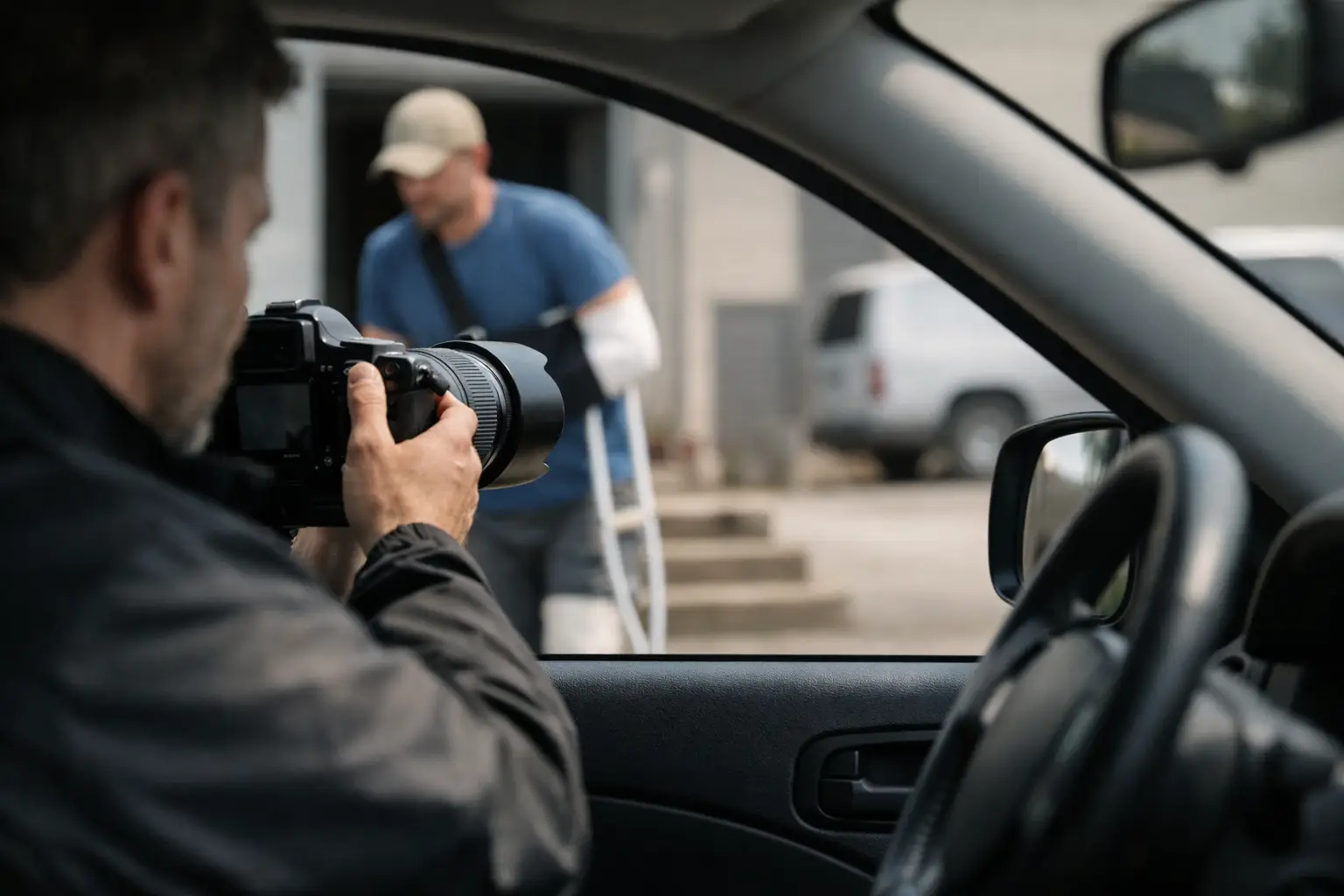
A claim file can contain medical restrictions, work-status reports, and conflicting accounts of daily capability. Surveillance for workers compensation claims provides a way to verify observable activity without relying on assumptions. When it is properly authorized, lawfully conducted, and accurately reported, surveillance can help counsel, carriers, employers, and claims professionals make decisions based on documented facts.
The goal is not to follow every claimant or search for a single unfavorable moment. Effective investigative work is targeted to a legitimate case question: whether observed activity is consistent with claimed restrictions, whether a claimant can be located for a necessary proceeding, or whether additional investigation is justified. That distinction matters legally, operationally, and ethically.
When Surveillance May Be Appropriate
Surveillance is most useful when a file presents specific, verifiable concerns rather than general suspicion. A claimant may report limitations that appear inconsistent with public activity, social media content, prior statements, or information developed through a lawful investigation. A pending hearing, an independent medical examination, a return-to-work dispute, or a suspected unreported job can also create a clear need for fact development.
Timing is often more important than the length of the assignment. A surveillance plan should account for known appointments, work schedules, court dates, travel patterns, or other objectively supported activity windows. Assigning an investigator with no defined objective can increase cost while producing little usable information.
For example, a claimant who reports an inability to drive may be observed entering and operating a vehicle. That observation alone does not decide a claim. The relevant questions are what occurred, how long it occurred, whether assistance was used, what was clearly visible, and whether the activity conflicts with the reported restriction or merely appears unusual. Investigators document observations. Attorneys, adjusters, medical professionals, and courts determine their legal and medical significance.
What Lawful Surveillance for Workers Compensation Claims Looks Like
A defensible surveillance assignment begins before an investigator enters the field. The requesting party should identify the claim number or matter, the subject’s current identifying information, known addresses, available vehicles, recent photographs if lawfully obtained, and the precise purpose of the assignment. Clear instructions reduce misidentification and keep the scope tied to the matter at hand.
Field surveillance should be conducted from locations where the investigator has a lawful right to be. Public streets, publicly accessible parking areas, and other public-facing locations may permit observation, subject to applicable laws and site-specific restrictions. Private homes, fenced yards, medical facilities, and workplaces can involve heightened privacy, trespass, or policy concerns. An investigator should not enter private property without authorization, use deceptive access to obtain information, or attempt to record activity where a person has a reasonable expectation of privacy.
Colorado matters may also involve practical geographic challenges. A Denver-area address may lead to activity in nearby municipalities, mountain communities, or across state lines. If the assignment may extend into Wyoming or another jurisdiction, the investigative plan should account for applicable licensing, recording, privacy, and reporting requirements before work begins.
Audio is a separate issue from video. Recording conversations, accessing electronic accounts, placing a tracking device, or using specialized technology may trigger legal restrictions that do not apply to ordinary visual observation from a public location. Those methods should never be treated as routine surveillance tools. When the scope is uncertain, the requesting attorney or claims professional should obtain legal guidance before authorizing the work.
The Value of a Court-Ready Report
Video can be persuasive, but it is rarely sufficient on its own. A short clip without date, location, context, or continuity may invite avoidable challenges. The written report establishes what the investigator observed, when it occurred, how the subject was identified, and whether there were gaps or limitations in coverage.
A professional surveillance report should preserve the record with operational detail, including:
- the assignment date, surveillance time, and general location;
- the investigator’s observations in chronological order;
- the basis for subject identification and vehicle identification;
- relevant still images or video references with accurate timestamps; and
- a clear account of conditions that affected the observation, such as distance, traffic, weather, or loss of visual contact.
The report should separate facts from interpretation. “Subject carried two grocery bags from a vehicle to the residence” is an observation. “Subject is not injured” is a conclusion beyond the investigator’s role. This discipline protects the credibility of the work and makes the material easier for a legal team or adjuster to evaluate.
Chain of custody also matters. Original video files, photographs, notes, and report versions should be retained according to the provider’s procedures and the client’s preservation requirements. Editing, labeling, and transferring files should be handled carefully so the evidence can be authenticated if it is later used in litigation, mediation, or a claim review.
Surveillance Is Not a Substitute for Claim Analysis
One of the most common mistakes in workers compensation investigations is treating an isolated observation as a complete answer. Physical capacity can vary from day to day. A claimant may be able to perform a task briefly but not repeatedly, safely, or for a full work shift. Medical restrictions may also permit some activity while prohibiting lifting, repetitive movement, prolonged standing, or other specific demands.
That is why surveillance should be considered alongside medical records, deposition testimony, employer information, job descriptions, and other admissible evidence. A well-documented observation may support further inquiry, but it should be evaluated in context. The same principle applies when surveillance appears to support the claimant’s account. Objective findings are valuable regardless of which side they favor.
Claims professionals should also avoid unnecessary repetition. If an initial assignment identifies no activity and no practical lead, continuing surveillance without a changed circumstance may not be cost-effective. Conversely, if verified activity establishes a pattern that directly relates to a disputed restriction, a focused follow-up may be appropriate. The assignment should be adjusted based on facts, not momentum.
Setting a Clear Assignment Scope
Before authorizing surveillance, establish the objective, expected timeframe, geographic area, reporting deadline, and spending limit. Decide in advance whether the investigator should conduct only stationary observation, follow the subject if lawful and safe, attempt location verification, or report immediately if significant activity is observed. These instructions prevent confusion in the field and give the client control over cost.
Communication protocols should be equally clear. Claims and legal teams may need same-day reporting before a hearing, recorded statement, settlement conference, or medical examination. In other matters, a complete report and evidence package may be more useful than frequent updates. The right approach depends on urgency, the stage of the claim, and whether immediate decisions are required.
For Denver-area matters, Ranger TCS Investigations can support focused surveillance assignments with discreet field observation and documented reporting. The most productive requests provide a defined investigative question, accurate subject information, and a realistic activity window. This allows the investigator to work efficiently while maintaining the professionalism expected in a legal matter.
Questions to Ask Before You Authorize Surveillance
A short internal review can prevent an unfocused assignment. Ask whether there is a specific inconsistency to examine, whether the expected observation window is supported by current information, and whether the requested scope is lawful in the relevant jurisdiction. Confirm who will receive updates, who can approve additional time, and how evidence must be delivered or preserved.
It is also wise to consider the potential value of a negative result. If observation does not reveal relevant activity, that fact may still help a claims professional avoid pursuing a weak theory. Surveillance is an evidence-gathering tool, not a guarantee of a particular outcome.
The strongest assignments begin with a narrow question and end with a complete factual record. When the work is discreet, lawful, and tied to a legitimate claims issue, the result is not simply footage. It is reliable information that can support a better next decision.

